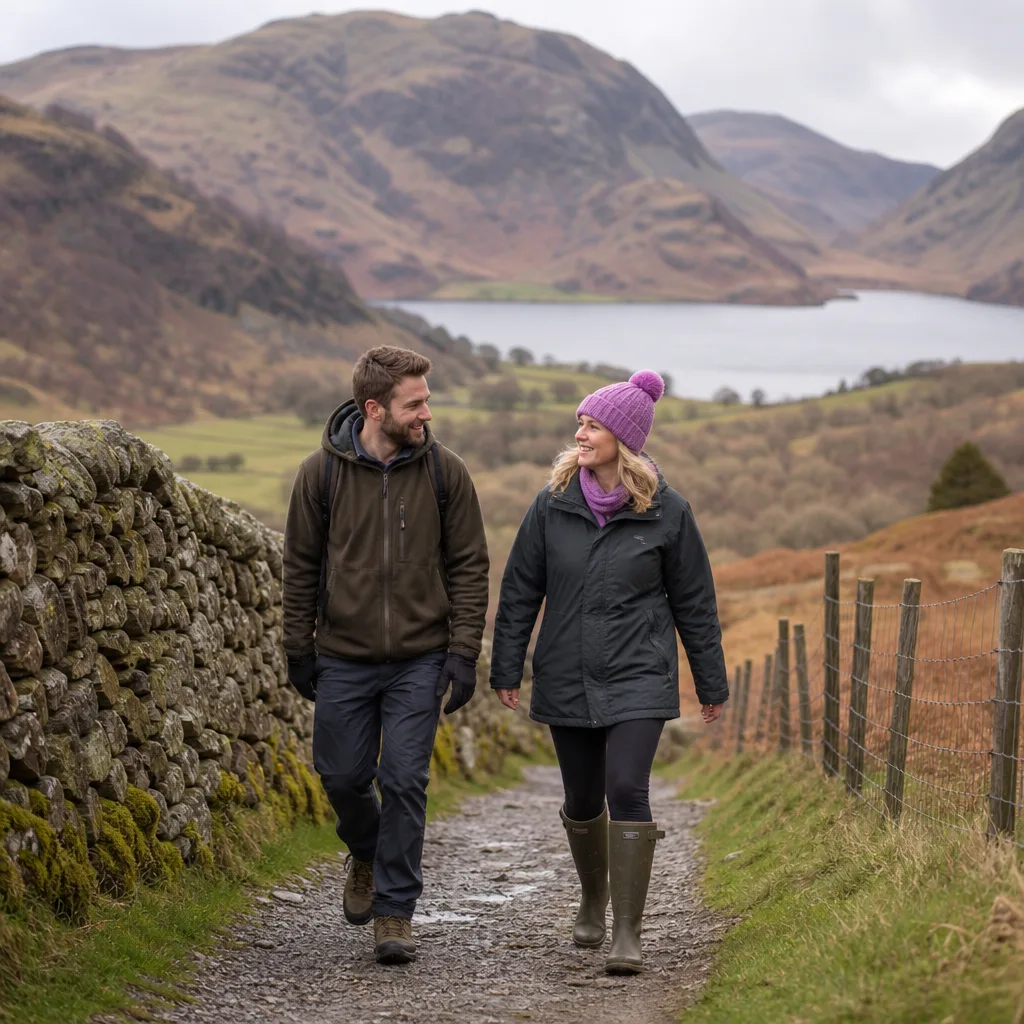
Straightforward advice on writing your profile, recognising scams, protecting your privacy and meeting local people safely.
You match with someone in Kendal. You live near Carlisle. On a map, that may not look unreasonable. In practice, it can mean a long drive, uncertain traffic and one of you doing most of the travelling before you have even worked out whether you get on.
That small example explains why dating in Cumbria needs a local guide. Distance is only part of the calculation here. Roads, weather, public transport, work patterns and the difference between living in a town and living several miles beyond it all matter. A useful Cumbria dating site should help you find people close enough to meet without turning every coffee into an expedition.
What makes online dating in Cumbria different?
Successful dating in Cumbria depends on realistic travel times, clear location information and sensible safety arrangements suited to both towns and rural communities.
Cumbria is not one neat dating market. Carlisle and its surrounding villages form one pattern; Kendal and the south form another; Barrow, Ulverston and the west coast have their own connections. A thirty-mile radius can cross awkward routes, while two places that look farther apart may be easier to reach because the road or rail connection is direct.
This is why we give more weight to practical journey time than to a simple circle on a map. Someone may be a good conversational fit, but if meeting requires two buses and a lift home from a relative, that affects whether a connection can develop. Local-first matching is not about narrowing your chances for the sake of it. It is about concentrating on people you could realistically see again.
- Use a recognisable area, not your address. Saying Carlisle, Kendal, Penrith, Barrow-in-Furness or a nearby district gives enough context without revealing where you live.
- Think in journeys. Ask how long the trip takes on an ordinary weekday evening, not just how many miles appear on the map.
- Allow for the season. A route that feels easy on a light summer evening may be less attractive in winter rain, frost or poor visibility.
- Be honest about your range. If you do not want to drive across the county regularly, say that early and without apology.
A smaller number of genuinely reachable people is usually more useful than hundreds of profiles scattered across the North West.
This guide covers the whole process: creating a profile that sounds like you, controlling what strangers can see, recognising manipulation, arranging a safe first meeting and building a local connection at a pace that suits both people. If you are ready to browse, you can also meet Cumbria singles by area rather than relying on an oversized radius.
Build a Profile That Is Honest, Specific and Private
A good profile does not need to impress everybody. Its job is simpler: give the right people enough detail to start a normal conversation, while keeping your home, workplace and daily routine private.
How do you write an online dating profile that gets genuine replies?
Write a clear, specific profile that shows how you spend ordinary time and what kind of local relationship you are available for.
Start with real life. “I like music, food and travel” could belong to almost anyone. “I spend Saturday mornings walking by the river, make a decent curry and would rather hear a small live band than queue for a nightclub” gives another person something to answer. Specificity acts like a door handle. It gives the reader somewhere to begin.
You do not need to perform. Cumbria singles range from people in their twenties settling into a new job to people dating again after a marriage or long partnership. Some want a busy social life; others want one dependable person to share weekends, meals and the occasional day out. State what you genuinely have time for.
- Choose your location level. Name your town, broad district or nearest recognised place, but leave out your street, village hamlet or precise workplace if that could identify your home.
- Describe ordinary life. Mention two or three things you really do, rather than an ambitious list of activities you tried once.
- Say what you are looking for. You can be open-minded while still saying whether you want dates, a relationship or companionship that may develop gradually.
- Add a conversation hook. A favourite local walk, a film you recently enjoyed or a question about the best Sunday lunch nearby makes replying easier.
- Read it aloud. Remove anything that sounds borrowed, defensive or unlike the way you actually speak.
Photos should be recent enough that somebody can recognise you when you meet. Include a clear image of your face, preferably in natural light, and one or two wider photographs that show something of your life. Avoid using only group pictures, heavy filters or photographs in which an ex-partner has obviously been cropped out. If children appear in a photograph, use another image or obscure them completely. They did not agree to be part of your dating profile.
What personal information should you keep private?
Keep your exact address, workplace, financial details, routine and identifying documents private until trust has been earned over time.
Privacy is not secrecy. You can be warm and open without handing a stranger the pieces needed to locate you, impersonate you or guess security answers. Think of personal information as a jigsaw. Your first name may reveal little; your first name, employer, village, dog’s name and public social account may reveal almost everything.
- Check your photographs. Look for house numbers, car registrations, school logos, staff badges, distinctive views from your home and location information saved in the image.
- Search your own profile text. Enter a distinctive phrase from it into a search engine. If it leads straight to your public social media or business page, rewrite it.
- Use the site’s messages first. Staying on the platform preserves reporting tools and avoids giving away your telephone number too quickly.
- Protect work information. “I work in healthcare near Carlisle” is safer than naming a small practice, your job title and your usual shifts.
- Keep family details broad. It is reasonable to mention that you have children. Names, schools, timetables and custody arrangements should remain private.
People in small communities face an extra difficulty: modest details can identify somebody quickly. This can be particularly relevant for LGBTQ+ members, teachers, health workers and anyone whose work is public-facing. Use the privacy controls available, avoid linking open social profiles and decide in advance what you are comfortable disclosing.
Practical profile check: ask a trusted friend to read your profile once for tone and once as a detective. Can they work out where you live, where you work or when your home is usually empty? If so, remove a few clues.
Before paying for any service, read the price, billing period, renewal terms and cancellation route. Take a screenshot of the offer you accepted and keep confirmation emails. A free profile can reasonably have limits, but those limits and any later charges should be stated clearly. Safety controls, blocking and reporting should never depend on buying the most expensive option.